Characteristics of Khorasan handwoven carpet
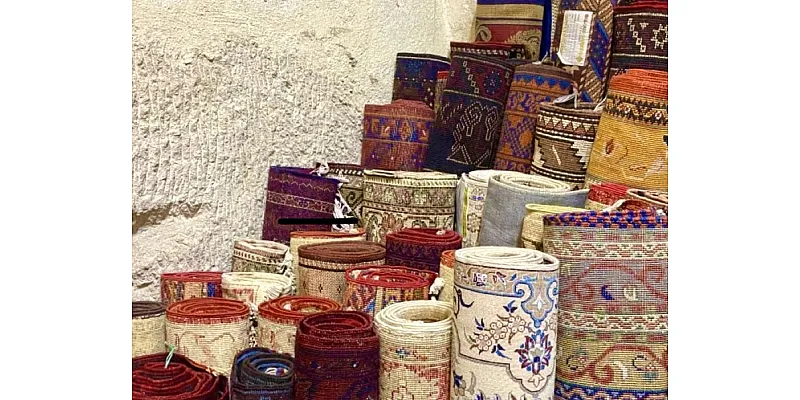
South Khorasan Carpets: A Historic Iranian Weaving Tradition
South Khorasan carpets were among the most famous Iranian carpets in the past. Their history dates back to the reign of Shahrokh Mirza in Herat, approximately 600 years ago, when carpet weaving flourished in this region.
Historical Background of Persian Carpets
Iranians have been renowned for centuries for their silk products, wool textiles, precious stones, and handwoven carpets. European merchants traded these products via the Silk Road, highlighting the cultural and economic significance of Iranian handmade crafts.
Given Iran’s historical reliance on crude oil, the economy has often been single-product dependent. To reduce this dependency, it is crucial to diversify non-oil exports and strengthen handicraft production.
Importance of Handicrafts
-
Handicrafts provide sustainable employment opportunities, especially for creative workers.
-
Local climate and geographical constraints have influenced the regional uniqueness and limited global exposure of this craft.
Geography and Administrative Divisions of South Khorasan
-
Area: Over 95,000 km²
-
Borders: North – Razavi Khorasan, East – Afghanistan (~330 km border), West – Yazd, South – Sistan & Baluchestan and Kerman
-
Administrative Divisions (as of 2007): 7 counties, 18 districts, 21 cities, 48 rural districts
Handicraft Diversity
South Khorasan has over 40 registered handicraft fields, with carpet and rug weaving being among the most prominent.
Major Carpet Producers
One of the largest producers in Birjand is Shargh Birjand Company, considered the oldest private carpet producer in Iran, established in 1929 (1308 SH). All its carpets carry the brand “Shargh Birjand” within a sun emblem.
Carpet Weaving in South Khorasan: Historical Periods
-
Pre-1921 (Before 1300 SH) – Era of high-quality carpet production.
-
1921–1943 (1300–1322 SH) – A period of decline due to World Wars I & II, affecting export and sales.
-
Post-1951 (1330 SH onwards) – Revival and flourishing, led by master weavers like Aziz Mohammad Zohraei, Dr. Abdolali Ahmadi, Abdulmajid Jamshidi, and Gholamhossein Kamiabi.
Carpet Weaving Techniques in South Khorasan
-
Loom Setup: Installation of warps, Haft and Koji rods.
-
Preliminary Weaving: Several rows woven in kilim style; edges reinforced using three-ply threads (Shiraza).
-
Main Weaving Process:
-
Alternating top and bottom warp threads using Koji rods
-
Inserting thin and thick wefts
-
Tightening with comb and hammering
-
-
Finishing: Hand trimming with scissors; smoothing the surface.
-
Weaving Styles:
-
Persian style
-
Turkish style
-
Single (Tayi) weave, which is more delicate but time-consuming
-
Major Carpet and Rug Centers
Carpet Weaving Hubs
-
More than 80% of village residents are engaged in carpet weaving.
-
Key regions: Mod, Derakhsh, Gask, Chaj, Asbian, Taqab, Nokand, Sarbisheh, Alghar, Khosf, Baghestan, Kushkak, Khosroabad, Naharejan, Shakhnat, Forkhas, Darreh Abbas, Rajnok, Sarchah, Fazlabad, and more.
Rug Weaving Hubs
-
Prominent for wool rugs in Zirkuh Qaen: villages such as Bamrud, Esfad, Abiz, Shahrokht.
-
Other villages producing wool rugs: Khalf, Feyzabad, Sarab, Tak Khan, Seyedabad, Khor, Khosf, Shirgah Agha, Darvishabad, Arabkhaneh, Hajjiabad, Fandokht, Shamsabad, Bahmanabad, Garmab, Tighab, Esfeden, Shakhnat, Gazar, Darreh, Chah Deraz, Sarzeh, Gorid, Kam Chah, Mazar Saqi, Bichand
